Why Are We Seeing So Many Hummingbird Hawk-Moths in Oxfordshire in 2026?
Hummingbird Hawk-Moth sightings in Oxfordshire appear to be particularly noticeable in 2026, with warm weather, favourable conditions, migration, and plenty of flowering plants creating good opportunities to see these spectacular moths.
If you have been sitting in your garden recently, particularly around lavender or other flowering plants, you may have been lucky enough to spot something that looks a little bit like a tiny hummingbird.
It isn’t a bird, though. It is a Hummingbird Hawk-Moth, and 2026 is turning out to be a particularly interesting year for sightings across Britain.
So why are we seeing them?
Is it simply because the weather has been so warm, or is there something else going on?
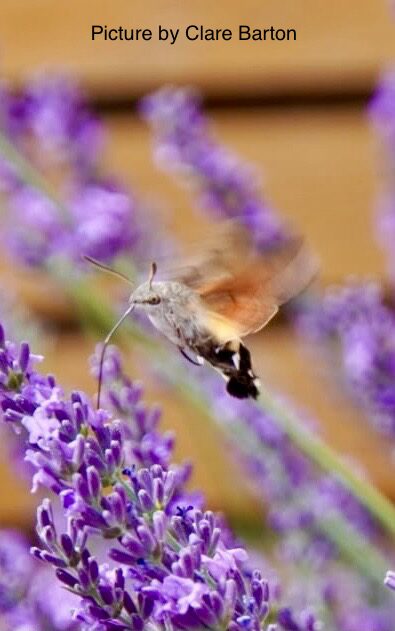
Table of Contents
- Why Are There So Many Hummingbird Hawk-Moths in Oxfordshire in 2026?
- What Is a Hummingbird Hawk-Moth?
- Does Hot Weather Bring More Hummingbird Hawk-Moths to Britain?
- Why Are Hummingbird Hawk-Moths Attracted to Lavender?
- Where Can You See Hummingbird Hawk-Moths in Oxfordshire?
- A Hummingbird Hawk-Moth in Harwell, Near Didcot
- Why Do Hummingbird Hawk-Moths Look Like Hummingbirds?
- Are There Actually More Hummingbird Hawk-Moths, or Are We Just Seeing More?
- Are Hummingbird Hawk-Moths Becoming More Common in Britain?
- How Can You Attract a Hummingbird Hawk-Moth to Your Garden?
- What Should You Do If You See a Hummingbird Hawk-Moth?
- Why 2026 Could Be a Very Good Year for Hummingbird Hawk-Moths
- A Lovely Reminder of What Is in Our Gardens
- Frequently Asked Questions
- Sources and 2026 Evidence
Why Are There So Many Hummingbird Hawk-Moths in Oxfordshire in 2026?
The short answer is that 2026 has provided unusually favourable conditions for Hummingbird Hawk-Moths in Britain.
Hummingbird Hawk-Moths are migrant insects and their numbers can vary considerably from year to year. Weather conditions can influence migration, while warm and sunny conditions make the moths more active and easier to spot.
UKMoths describes the Hummingbird Hawk-Moth as an immigrant species which can sometimes occur in large numbers, particularly after an extended period of warm weather or southerly airflow.
That makes the weather an important part of the story.
And the weather in 2026 has certainly given us something to talk about.
The Met Office reported that by 15 July, 2026 had already recorded more days above 30°C than the whole of 1976. It also became the first year in the UK weather record to reach 35°C or higher in May, June and July.
Spring 2026 was also the warmest on record for England and Wales and the third warmest for the UK overall.
That doesn’t prove that the hot weather alone caused more Hummingbird Hawk-Moths to arrive, but it provides important context for why this has been such an interesting year for migrant insects.
There are several factors that can work together:
- Unusually warm weather during 2026
- Favourable conditions for migrant insects
- Warm sunshine encouraging moth activity
- Plenty of flowering plants providing nectar
- More people spending time outdoors and noticing wildlife
For more information about our local area and the pest control services we provide around Didcot, you can also visit our pest control in Didcot page.
What Is a Hummingbird Hawk-Moth?
The Hummingbird Hawk-Moth (Macroglossum stellatarum) is one of Britain’s most distinctive moths.
It is fairly large for a moth, but it is the way it flies that really catches your attention.
Instead of landing on flowers like many insects, it can hover in front of them while using its long tongue, known as a proboscis, to feed on nectar.
They are incredibly quick and can disappear almost as quickly as they arrived.
Hummingbird Hawk-Moths are also active during daylight, making them much easier to spot than many of the moths normally associated with being active after dark.
UKMoths records the species as an immigrant moth and notes its distinctive hovering behaviour and preference for feeding in sunshine.
- Large, fast-flying moth
- Can hover in front of flowers
- Feeds using a long proboscis
- Active during daylight
- Can migrate into Britain from continental Europe and further south
You can read more about the species on UKMoths’ Hummingbird Hawk-Moth guide.
Does Hot Weather Bring More Hummingbird Hawk-Moths to Britain?
Warm weather can certainly help, but it isn’t as simple as saying hot weather equals more Hummingbird Hawk-Moths.
These moths are migrants, and their movements can be influenced by temperature, wind direction and other weather conditions.
UKMoths notes that Hummingbird Hawk-Moths can occur in large numbers following extended periods of warm weather or southerly airflow.
Once the moths reach Britain, warm and sunny conditions can also make them much more active.
This is one reason why sightings can suddenly appear to increase during a spell of good weather.
The weather experienced across Britain during 2026 has been exceptional. The Met Office has documented several major heat events, including the first year on record to reach 35°C in May, June and July.
There is therefore good reason to think that weather conditions have helped create a particularly favourable environment for many heat-loving migrant insects this year.
However, it is important not to claim that temperature alone explains every Hummingbird Hawk-Moth sighting.
Migration, wind direction, food availability and simple visibility all play a part.
Read the latest information from the Met Office on the exceptional summer weather of 2026.
Why Are Hummingbird Hawk-Moths Attracted to Lavender?
If you want to see a Hummingbird Hawk-Moth, lavender is certainly a plant worth watching.
Lavender provides plenty of nectar and attracts a wide range of insects during the summer.
Bees visit it. Butterflies visit it. And Hummingbird Hawk-Moths can visit it too.
The RHS specifically includes the Hummingbird Hawk-Moth among the day-flying moths that can be attracted to flowering plants, and its guidance on lavender notes that the plant is particularly valuable to pollinators and wildlife.
The moth’s ability to hover makes it particularly impressive to watch as it moves between individual flowers.
- Lavender provides nectar
- Flowering lavender attracts many pollinating insects
- Hummingbird Hawk-Moths can hover while feeding
- Sunny flowering plants are easy places to watch for them
If you’re interested in making your garden more wildlife-friendly, the RHS guide to moths in your garden has useful information on plants that can attract moths.
Where Can You See Hummingbird Hawk-Moths in Oxfordshire?
You don’t necessarily have to head into the countryside to see one.
Hummingbird Hawk-Moths can visit gardens, allotments, parks and other places with plenty of flowering plants.
That means an ordinary Oxfordshire garden can provide exactly what these migrant moths need.
Areas around Harwell, Didcot, Abingdon, Wallingford and the wider South Oxfordshire area all contain gardens and green spaces where flowering plants can attract insects.
There are also local records of Hummingbird Hawk-Moths being seen in Oxfordshire.
This doesn’t prove that Oxfordshire has experienced a particular percentage increase in population, but it does demonstrate that the species is being seen locally.
Where to look for them
- Flowering lavender
- Sunny gardens
- Allotments
- Parks and green spaces
- Areas with nectar-rich flowering plants
- Gardens with a variety of summer flowers
The best time to look is generally during warm, sunny periods when the moths are actively feeding.
A Hummingbird Hawk-Moth in Harwell, Near Didcot
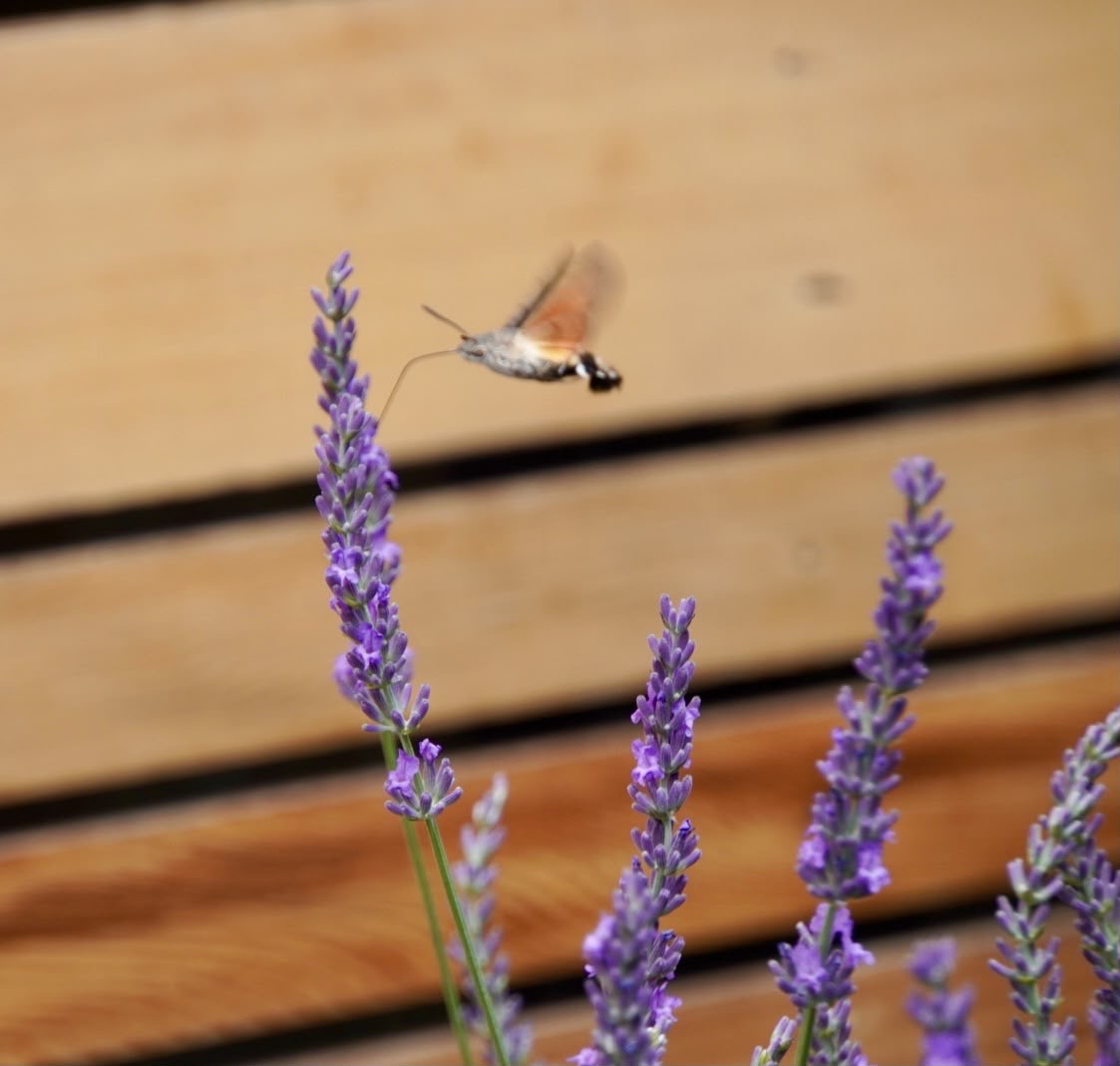
The photograph accompanying this article was taken by Clare Barton in Harwell, near Didcot, Oxfordshire.
The moth was feeding on lavender in the garden, making it a particularly good example of the sort of wildlife that can turn up in an ordinary Oxfordshire garden.
There was also a slightly unusual reason why we happened to notice it.
We were about to undertake a wasp nest treatment in a roof soffit when the Hummingbird Hawk-Moth was spotted.
Naturally, the wasp nest could wait for a moment.
It isn’t every day that you get to stand and watch one of these remarkable moths hovering over lavender.
It was also a good reminder that when we are carrying out pest control work, we are often working around all sorts of other wildlife.
Wasp nests sometimes need dealing with, particularly when they are close to people or inside parts of a building. But that doesn’t mean we don’t appreciate the other insects and wildlife we come across.
And a Hummingbird Hawk-Moth is certainly one worth stopping to admire.
If you’ve discovered a wasp nest or another pest problem while enjoying your garden, you can find more information about our local pest control services.
Why Do Hummingbird Hawk-Moths Look Like Hummingbirds?
This is probably the question people ask when they see one for the first time.
The resemblance really is remarkable.
The moth has rapidly beating wings that allow it to hover in front of flowers. It also has a long proboscis which it uses to reach nectar.
From a distance, particularly when you only see it for a few seconds, the combination of its size, speed and hovering flight can make it look remarkably bird-like.
You might see something hovering beside a flower and think:
“Was that a tiny bird?”
Then it disappears.
Once you know what a Hummingbird Hawk-Moth looks like, you start recognising them much more easily.
Are There Actually More Hummingbird Hawk-Moths, or Are We Just Seeing More?
This is an important question.
There is good reason to say that 2026 has produced notable Hummingbird Hawk-Moth activity in Britain, but it is important to distinguish between an increase in sightings and a measured increase in the overall population.
Formal recording data collected over time is needed before we could say exactly how much the population has changed.
There is also a very simple reason why sightings can suddenly seem to explode.
People are outside more when the weather is good.
- People spend more time in their gardens
- Flowering plants are easier to observe
- Warm weather increases insect activity
- Hummingbird Hawk-Moths are active during daylight
- Photographs can encourage other people to start looking
- Social media can make local wildlife sightings seem much more widespread
There can therefore be a genuine increase in moth activity at the same time as an increase in public awareness.
Are Hummingbird Hawk-Moths Becoming More Common in Britain?
There is a bigger question here about Britain’s changing climate.
Hummingbird Hawk-Moths have long been visitors to Britain, and some individuals can breed here when conditions allow.
Warmer conditions may influence how successfully some individuals survive and reproduce, but it would be too strong to say that climate change alone explains the number of moths seen in Oxfordshire during 2026.
Migration and weather conditions remain important factors.
British weather can also change dramatically from one year to the next, so Hummingbird Hawk-Moth numbers can continue to fluctuate.
It will be interesting to see what future recording data shows and whether sightings continue to increase over the coming years.
How Can You Attract a Hummingbird Hawk-Moth to Your Garden?
You don’t need a huge garden or anything particularly complicated.
The best approach is to provide nectar-rich flowering plants.
Lavender is an obvious choice, but it isn’t the only plant that can provide food for visiting insects.
The RHS also recommends plants such as sea lavender, buddleia, red valerian and Lychnis for attracting day-flying moths.
A garden with a range of flowering plants can benefit moths, butterflies, bees and many other insects.
- Plant nectar-rich flowers
- Grow lavender where possible
- Provide flowers throughout the warmer months
- Grow a variety of plants rather than relying on a single species
- Avoid disturbing visiting moths
- Watch flowering plants on warm, sunny days
You may not get much warning when a Hummingbird Hawk-Moth arrives.
One minute your lavender is covered in bees. The next minute something completely different is hovering in front of it.
What Should You Do If You See a Hummingbird Hawk-Moth?
The best advice is simple:
Stop and watch.
Hummingbird Hawk-Moths are fast-moving and can be easily disturbed.
Rather than rushing towards one, stand back and watch the flowers.
If you have a camera or phone with you, you may be able to get a photograph.
Don’t worry if it disappears after only a few seconds. That’s completely normal.
If you manage to photograph one, consider recording the sighting with a recognised wildlife recording scheme.
Wildlife recording relies on people reporting what they see, and photographs can be particularly useful for identification.
Why 2026 Could Be a Very Good Year for Hummingbird Hawk-Moths
There are several reasons why 2026 is proving particularly interesting for Hummingbird Hawk-Moths.
- Exceptional weather: The Met Office reports that 2026 has already experienced an extraordinary run of warm weather, including the first year on record to reach 35°C in May, June and July.
- Warm spring conditions: Spring 2026 was the warmest on record for England and Wales and the third warmest for the UK overall.
- Favourable migration conditions: UKMoths notes that Hummingbird Hawk-Moths can occur in large numbers following extended warm weather or southerly airflow.
- Plentiful food: Flowering gardens provide nectar for visiting moths.
- Daylight activity: Their daytime feeding behaviour makes them particularly noticeable during warm, sunny weather.
While we cannot yet say exactly how much the population has increased in Oxfordshire, there is certainly good reason to keep watching gardens and flowering plants this summer.
A Lovely Reminder of What Is in Our Gardens
The Hummingbird Hawk-Moth photographed by Clare in Harwell is a good example of how much wildlife can be right under our noses.
We were there for a completely different reason, getting ready to deal with a wasp nest in a roof soffit.
Instead, for a few minutes, our attention was on a remarkable migrant moth feeding on lavender.
It makes you wonder how many Hummingbird Hawk-Moths are visiting Oxfordshire gardens without anybody noticing them.
With favourable summer conditions, flowering gardens and more time spent outdoors, there are plenty of opportunities to see them.
So if you are in Oxfordshire, Harwell, Didcot or the surrounding area, and you have lavender flowering in your garden, keep your eyes open.
You might see bees.
You might see butterflies.
And if you are really lucky, you might suddenly see something that looks like a tiny hummingbird hovering over your flowers.
Don’t worry.
You haven’t started imagining things.
It could well be a Hummingbird Hawk-Moth.
And judging by the conditions and sightings we’re seeing across Britain this year, 2026 could be a very good year to spot one.
If you are looking for help with a wasp nest or another pest issue, you can contact Shire Pest Solutions for advice.
Frequently Asked Questions
Why are Hummingbird Hawk-Moths being seen in Oxfordshire?
Hummingbird Hawk-Moths are migrant insects and their numbers can vary from year to year. Warm weather, favourable conditions and plentiful flowering plants can help create good conditions for them to arrive and become active.
Are Hummingbird Hawk-Moths rare in Oxfordshire?
They are migrant visitors rather than permanent residents in most of Britain, and their numbers can vary considerably from year to year. They are regularly recorded in Britain, particularly during the warmer months.
Do Hummingbird Hawk-Moths like lavender?
Yes. Lavender provides nectar and can attract Hummingbird Hawk-Moths as well as bees, butterflies and other pollinating insects.
When is the best time to see a Hummingbird Hawk-Moth?
They are active during daylight and are easiest to spot on warm, sunny days. UKMoths records the species mainly from June to October, although sightings can occur outside that period.
Do Hummingbird Hawk-Moths migrate to Britain?
Yes. Hummingbird Hawk-Moths are immigrant moths and many individuals seen in Britain arrive from further south in Europe and the Mediterranean region.
Can Hummingbird Hawk-Moths breed in Britain?
Yes. Some Hummingbird Hawk-Moths can breed in Britain when conditions allow. In influx years, some larvae can develop and produce later adults.
Are Hummingbird Hawk-Moths dangerous?
No. Hummingbird Hawk-Moths are harmless to people. They are nectar-feeding moths and pose no danger when visiting gardens.
How can I attract a Hummingbird Hawk-Moth?
Plant nectar-rich flowering plants, including lavender, and provide flowers throughout the warmer months. On sunny days, watch flowering plants closely for a fast-moving moth hovering in front of the blooms.
What should I do if I find a Hummingbird Hawk-Moth?
Stand back and watch it rather than trying to catch or disturb it. If possible, take a photograph and consider submitting the sighting to a recognised wildlife recording scheme.
Sources and 2026 Evidence
This article combines a first-hand Hummingbird Hawk-Moth sighting in Harwell, Oxfordshire, with information from established wildlife, moth-recording, gardening and weather sources.
Met Office
The Met Office summer 2026 report states that by 15 July, 2026 had already recorded more days above 30°C than the whole of 1976. It also reported that 2026 had become the first year in the UK weather record to reach 35°C or higher in May, June and July.
The Met Office also reported that spring 2026 was the warmest on record for England and Wales and the third warmest for the UK overall.
UKMoths
UKMoths’ Hummingbird Hawk-Moth guide identifies the species as an immigrant moth which can occur in large numbers, particularly following extended warm weather or southerly airflow.
UKMoths also describes its distinctive daytime hovering behaviour and feeding from flowers using its long proboscis.
Royal Horticultural Society
The RHS guide to moths in your garden identifies the Hummingbird Hawk-Moth as an impressive day-flying moth and recommends flowering plants that can help attract moths.
The RHS also specifically notes that the Hummingbird Hawk-Moth is attracted to lavender.
The Harwell Sighting
The photograph featured in this article was taken by Clare Barton in Harwell, near Didcot, Oxfordshire, while the Hummingbird Hawk-Moth was feeding on lavender.
This is a first-hand local observation.
It should not, on its own, be taken as proof that the Hummingbird Hawk-Moth population in Oxfordshire has increased by a particular percentage. Formal recording data collected over time is needed to establish that.
What it does demonstrate is that Hummingbird Hawk-Moths are being seen in ordinary Oxfordshire gardens during 2026.
About Shire Pest Solutions
Although this is primarily a wildlife article, the sighting happened while we were attending a property for pest control work.
Shire Pest Solutions is a local pest control company based in Didcot, providing pest control services across Oxfordshire and surrounding areas.
If you need help with a wasp nest, rodents, insects or another pest problem, visit our pest control services or contact us page.